First Run
Coordination + Sensors + Instincts. Environmental awareness prevents missed clues and ambushes. Safest for beginners.
See first-run buildSpoiler-light practical guide
Zero Parades has 15 operant skills across three faculties: Action, Relation, and Intellect. Every skill check, dialogue branch, and dramatic encounter traces back to a number on this page.
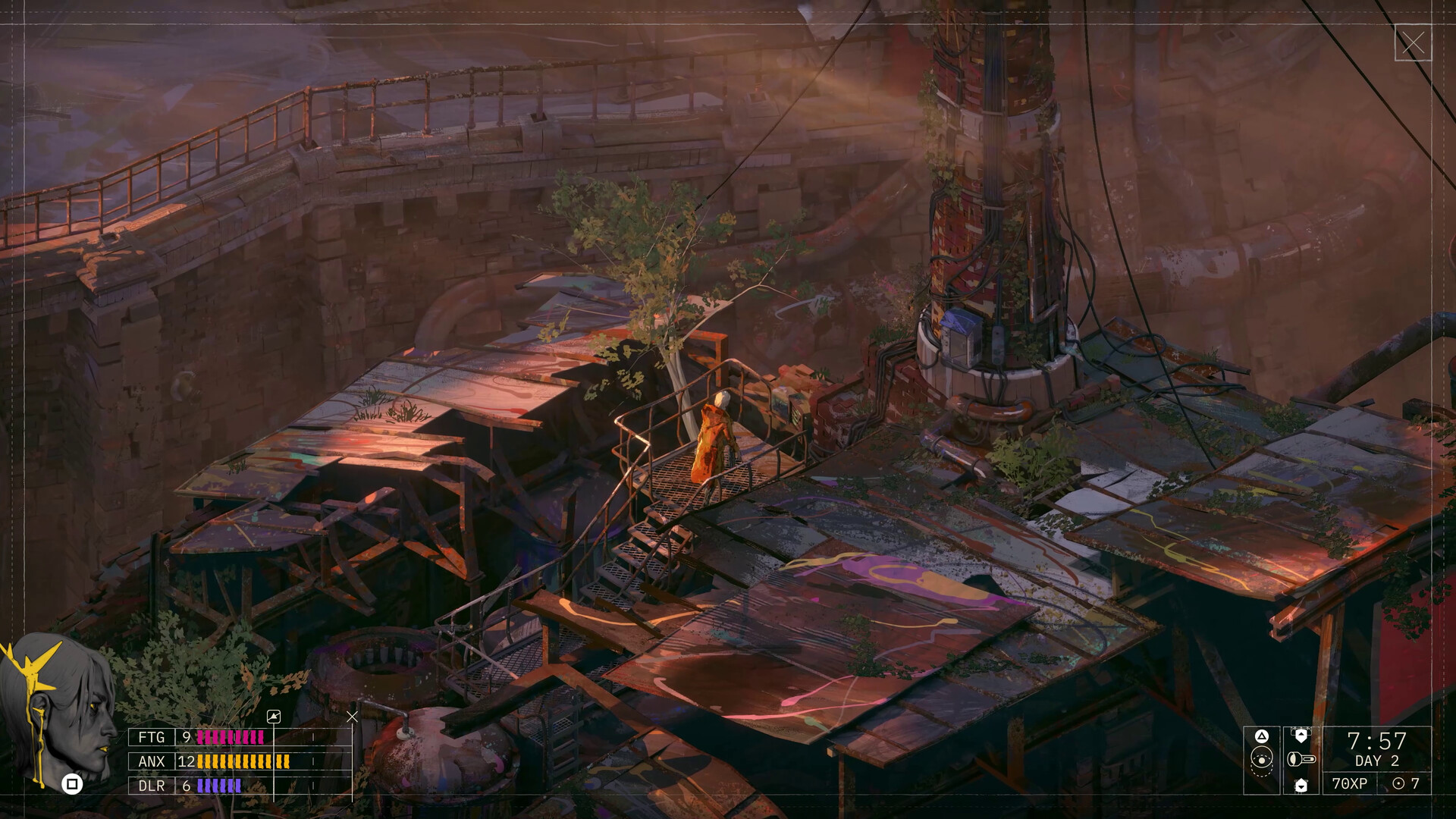
Best first-run skills: Sensors or Coordination for clues and movement, Cold Read or Personalism for dialogue, and Records or Technoflex for investigation and technical routes. The game has 15 skills across Action, Relation, and Intellect; build one main identity and two support skills instead of spreading points evenly.
A failed skill check can still give tone, suspicion, or alternate information. Do not assume every failure is wasted.
The safest beginner picks are Sensors, Coordination, Cold Read, Personalism, Records, and Technoflex. Sensors and Coordination reduce missed clues and physical dead ends. Cold Read and Personalism keep social scenes readable. Records and Technoflex support evidence, documents, machines, and the gun craft route.
Action skills cover physical awareness, precision, movement, and immediate response.
Relation skills govern social intelligence, emotional reading, politics, and personal connections.
Intellect skills handle analysis, pattern recognition, memory, and technical knowledge.
Treat checks as pressure tests. Some reveal facts, some reveal character, and some simply decide how costly a solution becomes. Exertion can push a dice result, but pushing too far risks lasting damage.
Delay upgrades until you know what the route is asking. Early hoarding can be correct if it prevents panic spending. Conditioning changes can alter how skills behave, so re-evaluate after major story beats.
A good build has a voice. If your strongest skills all support the same kind of spy, choices become easier to read.
Use each skill page to understand the role of a skill, not to chase every possible check. If a skill appears in several important scenes on your route, it deserves investment. If it only appears once, cover it with items or route order instead.
Pick one primary faculty and two support skills outside it. Example: Action primary with Cold Read and Records, Relation primary with Sensors and Grey Matter, or Intellect primary with Sensors and Nerve. This keeps your run flexible without making it flat.
Endings and late-route choices reward information more than one perfect number. For more ending context, invest in Personalism, Cold Read, Statehood, Sensors, and Records. For technical routes, add Technoflex. For safer exploration, keep Sensors or Instincts high enough that the world keeps talking to you.
Coordination + Sensors + Instincts. Environmental awareness prevents missed clues and ambushes. Safest for beginners.
See first-run buildPersonalism + Cold Read + Nerve. Talk through problems, recruit allies, navigate faction politics.
See social buildGrey Matter + Sensors + Records. Find hidden clues, decipher codes, connect past to present.
See investigation buildTechnoflex + Grey Matter + Records. Craft the improvised gun, hack systems, save 100 sol.
See technical build15 operant skills across three faculties: Action (5 skills: Coordination, Doppelgäng, Instincts, Sensors, Shadowplay), Relation (5: Blueprints, Cold Read, Nerve, Personalism, Statehood), and Intellect (5: Entanglement, Grey Matter, Poetics, Records, Technoflex).
Wait 2-3 hours, then level the skill that has appeared in 3+ checks. For most first runs, Sensors (finds hidden objects) or Cold Read (unlocks social dialogue) give the best early return.
Not always. Some failures reveal NPC suspicion levels, alternate dialogue, or route hints. Treat failures as information first, then reload only when a result blocks a goal you care about.
Sensors (find clues), Instincts (avoid danger), and Coordination (precision). These three prevent missed content and reduce frustration. Add Cold Read as your first cross-faculty backup.
Personalism (recruitment), Cold Read (read NPCs), and Nerve (tense negotiations). This trio supports recruitment, faction dialogue, and scenes where tone matters more than brute force.
Grey Matter (puzzles), Records (memory), and Sensors (clues). This trio uncovers hidden content and deciphers codes. Add Entanglement if you're seeing network puzzles.
Personalism, Cold Read, Statehood, Sensors, and Records are the safest ending-focused skills because they reveal social context, faction posture, and route consequences before major commitments.
No. Pick a primary faculty and invest heavily — you want at least one skill at 6+ by mid-game. A build with identity is stronger than a jack-of-all-trades where everything sits at 2-3.
Poetics can be niche early, Doppelgäng is situational without supporting skills, and Statehood tends to pay off more once faction politics matter. They are not bad skills, but they are less forgiving as first-run primaries.